
How Traffic Warrants Work in Essex County
Massachusetts treats motor vehicle matters two ways: civil citations and criminal charges. Both can drag you into court process. A civil citation moves through the Trial Court's civil motor vehicle rules, while a criminal traffic charge travels the same road as any other complaint. Pay the ticket on time and the first kind simply closes. Ignore it and you open a sequence that can end with an active warrant and a license consequence. In Essex County, the court record is what answers a traffic warrant question, and a clerk can walk you through the payment and motion routes that clear one. Driving history, insurance, and points all live somewhere else. None of them will tell you whether an Essex County bench warrant is out.
From Essex Citation to Warrant
The chain has four links, and each one is avoidable. A civil citation gives the driver twenty days to pay or request a hearing. Miss that window and you waive the hearing right. Late and release fees follow, and the registry sends a default notice allowing thirty days to fix things before a suspension kicks in. Next comes a contempt summons. Fail to appear after service in Essex County, and an arrest warrant can issue.
Process flow: Citation issued › 20-day response window › Default and fees › Contempt summons › Warrant if the summons is ignored.
A hearing can also end in a finding the driver disputes. That's a separate Essex County problem, and the appeal rules sit in the citation paperwork.
Essex County Traffic Warrant Checks
Every channel a driver needs exists, and none of them is a driving record. The case index shows the docket for the citation or complaint. The clerk of the Essex County District Court that handled the matter confirms the current status. The state payment system takes money but does not clear a warrant. The registry handles the license consequence, and only after the court acts.
- Search the state case index by ticket or citation number, or by name if the number is lost.
- Select District Court and the location that handled the citation, then read the event history for a default or warrant entry.
- Call that District Court clerk and ask whether the case is open, whether a warrant issued, and what the court wants next.
- Pay any fine or fee through the method the court approves, and ask for a receipt that names the case.
- Ask the court for the release form or supplemental abstract once the default is satisfied, because that paperwork is what the registry needs.
The state's traffic ticket payment page lists every payment route for Essex County drivers, including the mailing address for mailed payments.
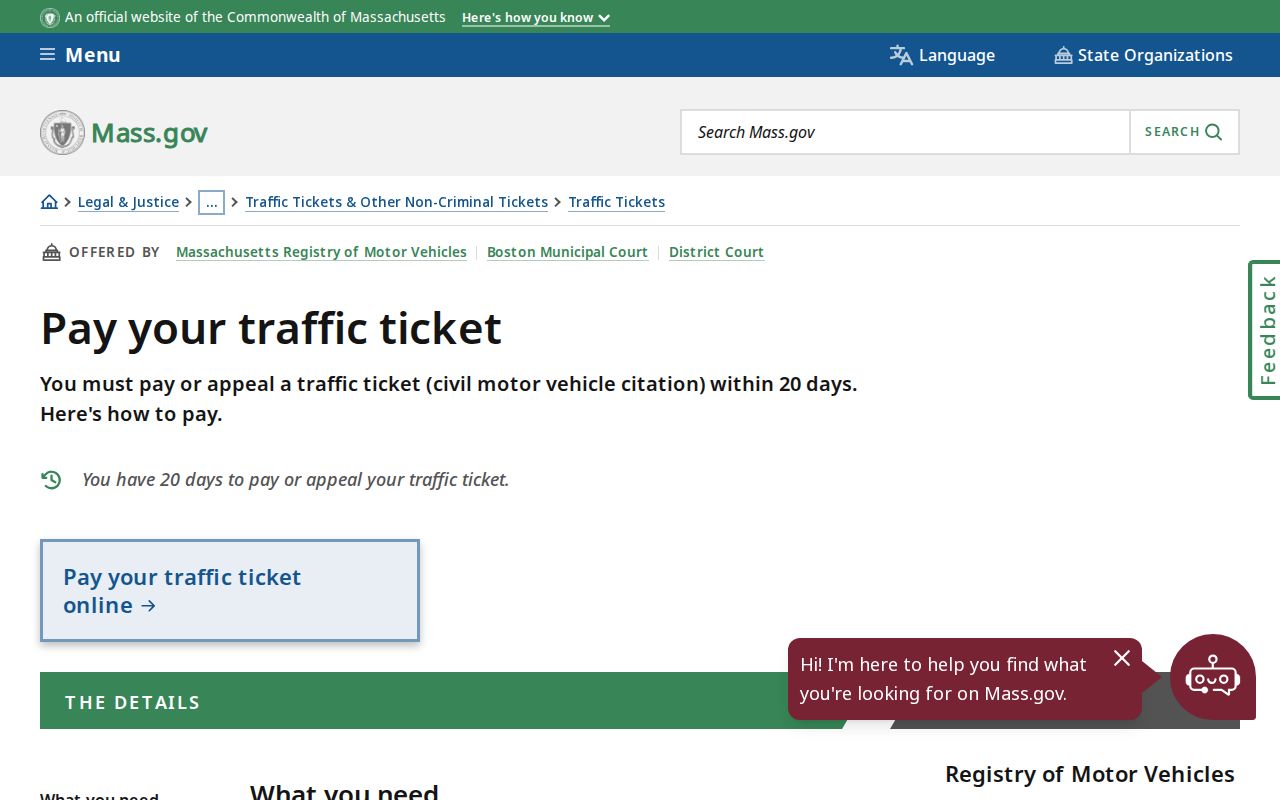
Payments sent that way reach the citation processing center. They still do not remove an Essex County warrant a judge has already issued.
Ticket Numbers in Essex Warrant Checks
A citation number beats a name. It skips the spelling problems that plague a name search and lands straight on the case. In an Essex County warrant check, the index exposes the same court context fields as any other search, with the citation tab doing the work.
| Field | Type | Notes |
|---|---|---|
| Court Department | Dropdown | District Court for Essex traffic cases |
| Court Location | Dropdown | Gloucester, Haverhill, Ipswich, Lawrence, Lynn, Newburyport, Peabody, or Salem |
| Ticket or Citation Number | Text | Take the number from the citation itself |
| Name | Tab and text | Use when the citation number is lost |
| Case Number | Tab and text | Exact formatting required for this route |
Note: a citation search reaches the motor vehicle case, and a related Essex County criminal charge may sit on a different docket in the same court.
Traffic Warrants: What They Show
The docket for a traffic matter is short and factual. It shows the citation, the court, the finding or default, and any process that followed. The citation number is the identifier a clerk will ask for. In Essex County, it appears in a fixed format printed by the registry rather than by the court.
| Citation Number | Printed on the ticket and used for the citation search tab; copy it exactly, as in T1234567890 |
|---|---|
| Violation | The alleged civil violation or criminal motor vehicle offense |
| Issuing Court | The District Court location handling the citation |
| Hearing Date | The date set for a hearing, if one was requested |
| Default and Fees | Late and release fees added after the response deadline passed |
| Status | Paid, defaulted, in contempt, warrant issued, or released |
Essex Warrants After a Missed Hearing
A missed hearing is not the end of the case, and state guidance points to a motion rather than a payment. Contact the Essex County District Court, explain why the date was missed, and ask to file a motion for good cause. A magistrate or judge decides. The appeal route from that decision is narrow, so the paperwork matters. The state page on traffic ticket hearings describes the outcomes a driver can expect and the consequences of missing the date.
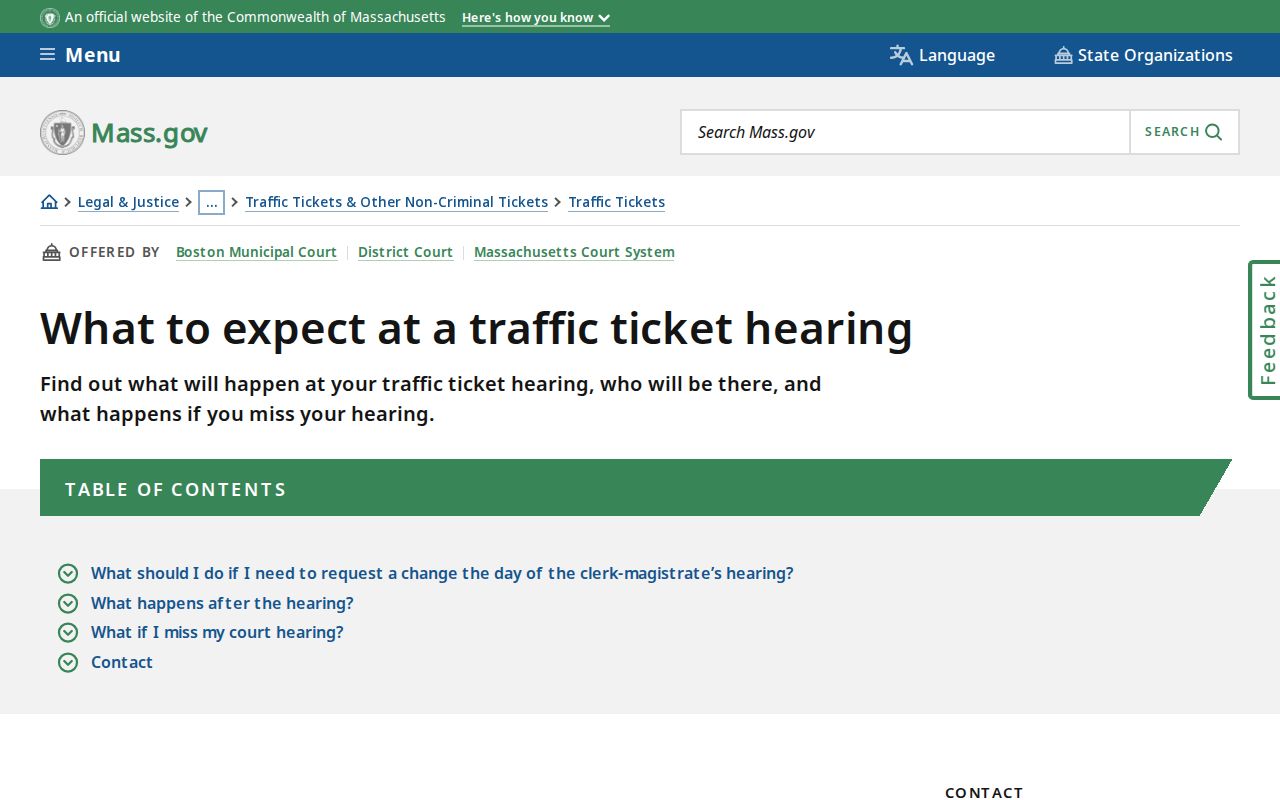
That page is why a clerk asks about good cause before discussing fees. The motion comes first, and the Essex County money comes after.
Clearing an Essex County Traffic Warrant
Clearing an Essex County traffic warrant happens in a courthouse, one of three ways. A judge can recall the warrant. The case can be paid and discharged, or a hearing can produce a new order. Online payment alone never does it. Ask the clerk which route applies before sending money anywhere.
Caution: A court default can suspend the right to operate until the court issues a release form, and the registry notice allows thirty days to act.
City Portals in Essex Are Not Warrants
Four of the largest cities in the county run their own citation and parking systems. Those are not court cases. Lynn's online citation portal asks for a citation number, a license plate, and a VIN, and it takes appeals within a set window, but it handles city citations rather than court process. Haverhill routes parking payments through its treasurer and an outside payment vendor. Lawrence uses a traffic and parking department channel, and Methuen lists parking among its online bills. None of those portals can see an Essex County District Court warrant, and none can clear one. They work for a city ticket and fail for a court default, which is why the clerk call comes first. Note: a city ticket that goes unpaid can still reach the registry, but the Essex County court file remains the place where a warrant exists.
How Traffic Warrants Trigger License Holds
License trouble trails the case in Essex County, not the other way around. Default on a criminal court matter and your right to drive can be suspended or revoked. The fix starts with the issuing court: contact it, get a release form or supplemental abstract, and the hold can lift. The registry notice gives you thirty days to satisfy the default, so move fast. Even after that, a post-conviction revocation can still stand on its own.
| Point | Court Default | Civil Citation Default |
|---|---|---|
| Who holds it | The District Court | The court and the registry process |
| First fee | Late and release fees after a missed deadline | Late and release fees added by the registry |
| Escalation | Contempt summons, then a possible warrant | Registry default letter and suspension |
| How it ends | Recall, payment, or a hearing order plus a release form | Payment or a hearing, with fees cleared |
What to Bring to a Warrant Appearance
Showing up ready makes an Essex County warrant appearance go faster. The judge or clerk wants proof of who you are, a straight account of what happened, and a workable plan for the money owed.
- The citation or ticket, or the citation number written down with the date.
- Photo identification and the docket or case number if one has been assigned.
- Documents that explain the missed date, such as a work schedule or a medical record.
- Any prior payment receipts, so the court can see what has already been paid.
- Contact information for a lawyer, if one is handling the case.
Before you leave the Essex County court, ask for written proof that the warrant was recalled or discharged. Keep the receipt with the case number on it.