
How Arrest Warrants Work in Essex County
An arrest warrant tells an officer to take someone into custody and bring them before the court. In a District Court, the paperwork starts with a criminal complaint sworn before a clerk-magistrate or a judge. That official decides two things: whether the facts support probable cause, and whether a summons or a warrant is the right process. The Superior Court route is different. There the case begins with an indictment, and the court may authorize a warrant once the grand jury returns it. Essex County sees both paths. Probable cause means reasonably trustworthy information would lead a prudent person to believe an offense happened and that this person committed it. That is the issuing standard. It settles only what goes on the paper. Anyone in Essex County who wants the rest of the story should ask the clerk.
Essex Arrest Warrant Requirements
Massachusetts Rule 6 spells out the paperwork. It is more specific than people expect. The warrant must name the person or describe them well enough to be identified, and it must state the substance of the offense. It is directed to an officer authorized to serve criminal process. It may be executed anywhere in the state. The rule also covers what happens after service. An officer need not hold the paper at the moment of arrest. If asked, the officer must show it as soon as possible or state the offense within a reasonable time, and must report the return to the issuing court. That return appears as an event on the docket. Footnotes and local practice vary by court. The clerk remains the authority on what a specific Essex County file contains, and Essex County has several courts to ask.
Arrest Warrants: What They Contain
A warrant itself is short. The case file behind it runs long. The table separates the two, because callers confuse them when phoning the Essex County clerk. When a file is impounded or sealed, none of these fields are visible to the public.
| Person Named | The name or a description sufficient to identify the subject |
|---|---|
| Case Number | The complaint or indictment number, for example 1177CR000456 |
| Offense | The substance of the charge, which the warrant must state |
| Issuing Authority | The District Court or Superior Court and the official who signed |
| Command | The direction to arrest and bring the person before the court |
| Return | The officer's report after execution, recorded on the docket |
From Essex Complaint to Warrant
Essex County warrants arrive by one of two routes. The route decides which clerk answers the phone. A District Court complaint is the everyday path: a police officer or private complainant presents facts under oath, the court weighs probable cause, and the court then chooses a summons or a warrant. An indictment is the felony path. A grand jury charges the case, and the Superior Court in Salem may authorize a warrant afterward. A summons is the court's default preference when the person is not already in custody and is likely to appear. A warrant answers the need for an arrest. Essex County dockets can carry either. Both are court process. Both appear in the same docket history.
How Warrants Get Served in Essex County
Service is shared across agencies in Essex County. Local police, State Police troopers, sheriff's deputies, and other authorized officers can all execute process. Which one shows up depends on the case, the assignment, and where the person is found. A warrant can be executed anywhere in Massachusetts. A case issued in Lawrence can be served in Gloucester. No transfer of the file is needed. Service still does not move the record, since the issuing clerk holds the docket, answers status questions, and receives the officer's return. Anyone wondering whether an Essex County warrant is open should call that office rather than a police records desk.
Which Essex Agency Serves Warrants
Four kinds of offices touch an arrest warrant in Essex County. Each has a different job. Knowing which is which prevents a wasted trip, especially for a family member helping from out of state.
| Agency | Function | What Not to Assume |
|---|---|---|
| District or Superior Court clerk | Holds the docket and confirms status | Cannot give legal advice or arrange a surrender |
| City police department | Serves process and keeps local reports | Does not control or clear a court warrant |
| Essex County Sheriff | Runs the correctional facility and serves civil process | Publishes no public criminal warrant list |
| U.S. Marshals Service | Serves federal process and pursues federal fugitives | Has nothing to do with a state warrant |
A fifth office shows up in narrower cases. In Essex County, the page for Lawrence Probate and Family Court covers its handling of support, custody, and abuse-prevention matters, and a limited apprehension process exists in some of them.
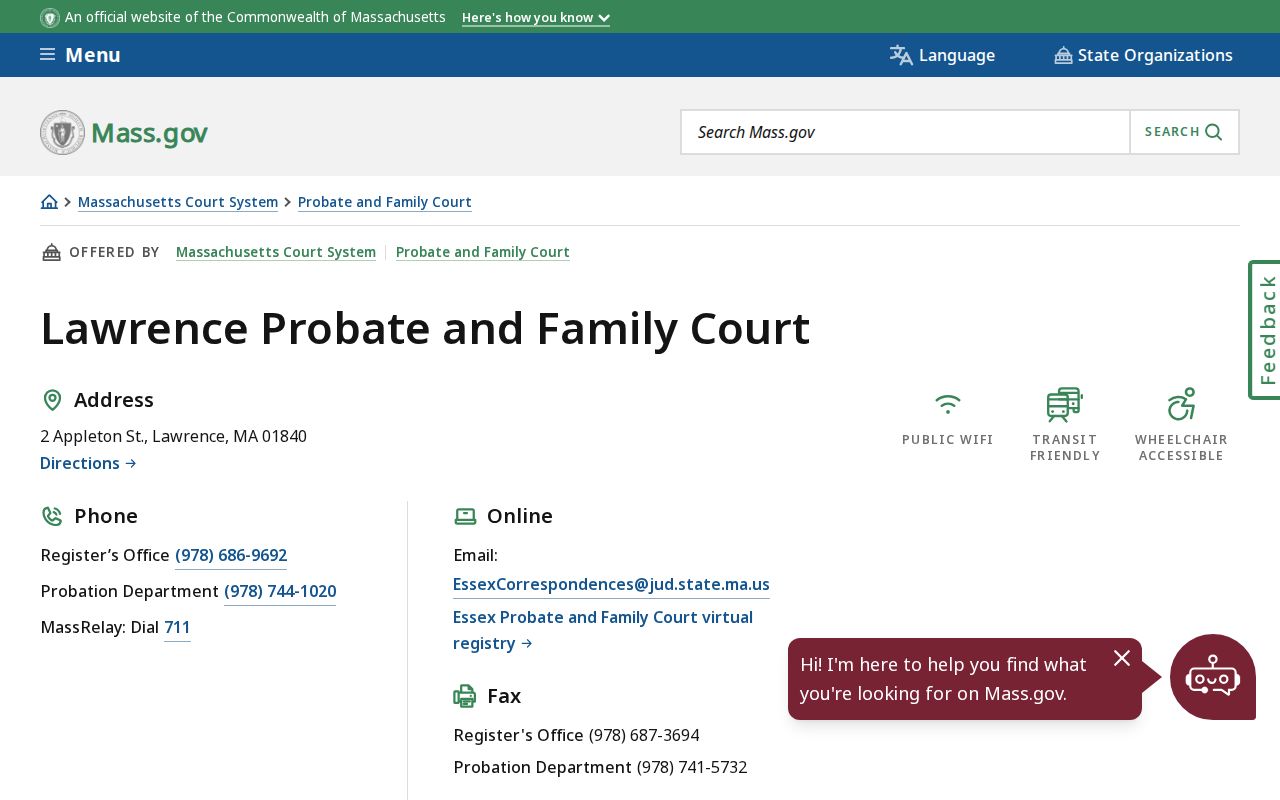
That process is not a criminal arrest warrant, and the registry in Essex County is not a criminal warrant list.
Arrest Warrants, Summonses, and Bench Warrants
All three documents bring a person before a court. Essex County callers mix them up because of that, though they differ in who starts the action, what each orders, and how it is cleared.
| Document | What It Orders | How It Ends |
|---|---|---|
| Summons | Appear at a stated time and place | Appearance, or a warrant if ignored |
| Arrest warrant | Arrest and bring the person to court | Arraignment and a release decision |
| Bench or default warrant | Arrest in a case already open | Recall, discharge, or service |
Resolving an Essex Warrant Early
Surrendering on your own terms beats a traffic stop. Arrange it through a lawyer and the issuing court. Massachusetts practice lets counsel ask the court how it wants an appearance handled, which may mean a filing, a scheduled date, or a walk-in at the courthouse. Bring identification. Bring the docket number too, plus documents that explain the situation. The sheriff's civil process office page describes a different kind of process entirely. Read it before anyone drives to Middleton expecting an Essex County court counter.
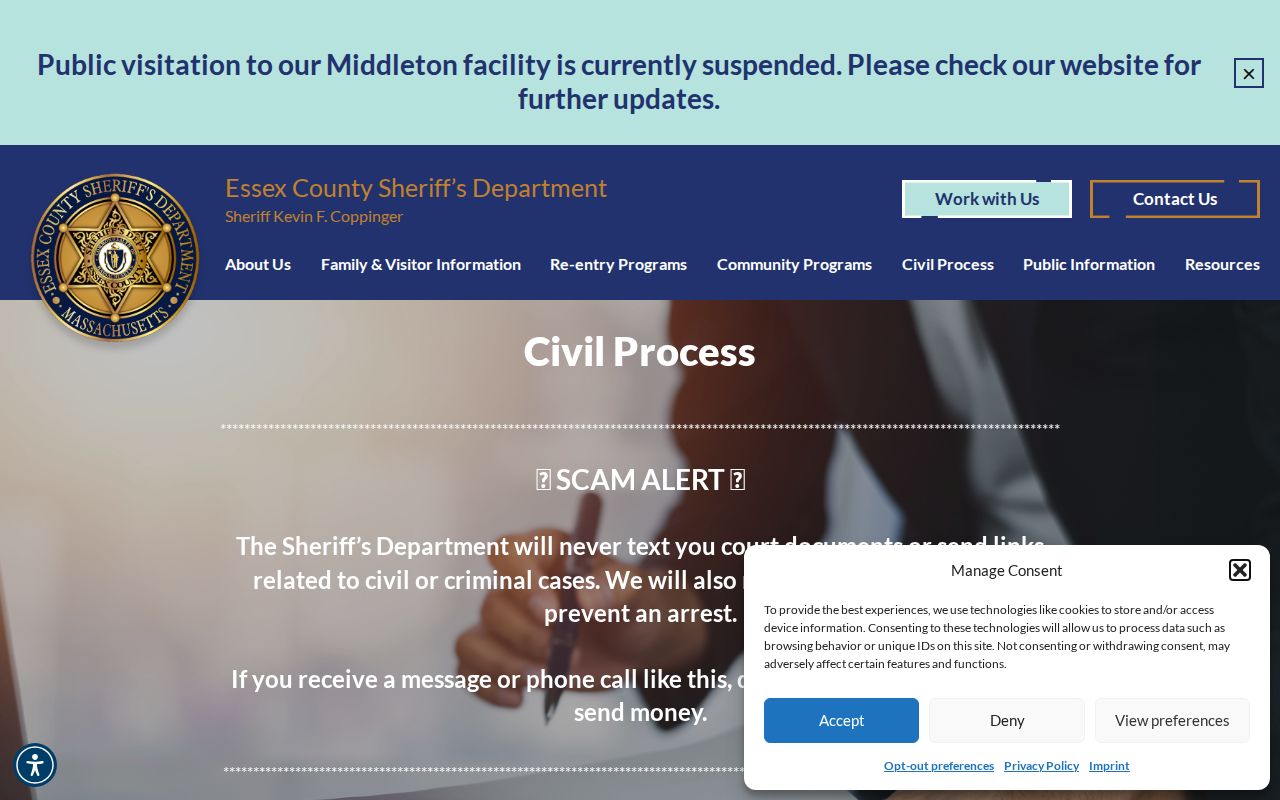
Essex County's civil service page also warns about scam messages that demand payment to stop an arrest. That demand is a scam, full stop. The civil capias page explains personal surrender for some in-county civil cases, not criminal warrants.
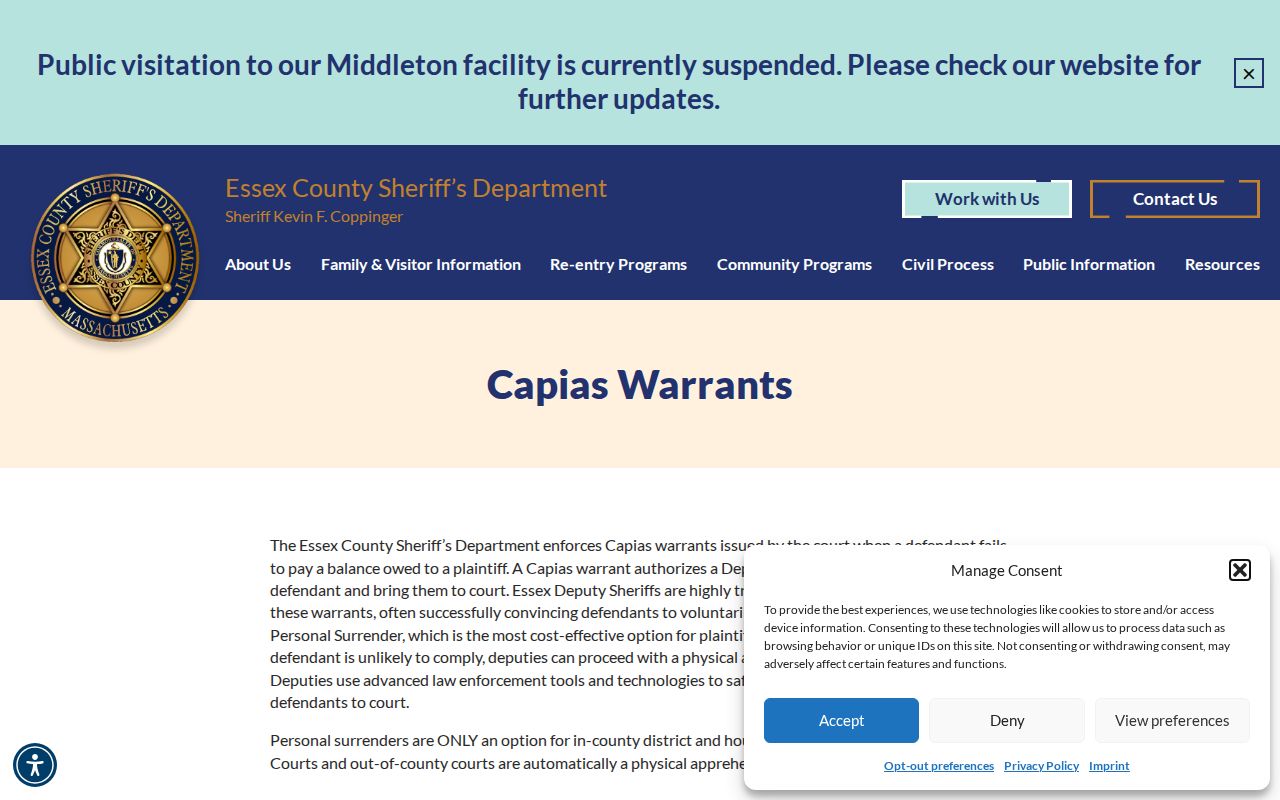
The paperwork sits elsewhere. Reading the fine print prevents the most common surrender mix-up in this county. Civil process papers, including the sheriff's forms index, are handled by an Essex County office apart from the criminal clerk.
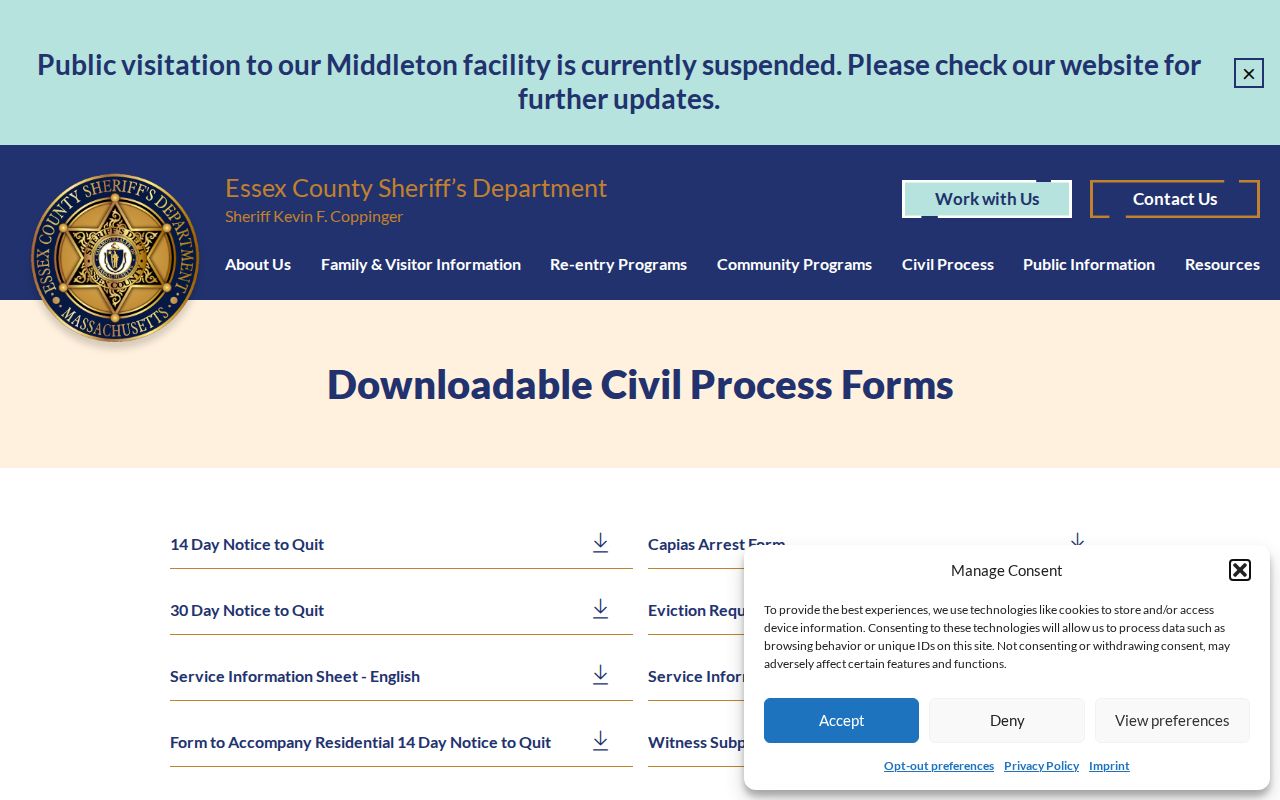
The party requesting service files those forms. Someone working through an Essex County criminal case files nothing here.
Handling an Arrest Warrant in Your Name
An arrest warrant in your name is urgent. The response has three parts: a lawyer, a plan, and a paper trail. Call the clerk at the issuing Essex County court to confirm the docket and what the court requires. Ask that lawyer to request a recall or an appearance date, or to come to court with you. A judge can appoint a public defender. That route opens when the situation calls for it.
Important: Do not wait to be stopped. An arrest can happen during any traffic stop, and the release decision that follows is easier to prepare for in advance.
Federal and Out-of-State Warrants in Essex
Federal and Massachusetts process run on separate tracks. An Essex County warrant index will not show a federal case. A federal warrant issues from a federal judicial officer on a complaint or indictment. The U.S. Marshals Service serves it. Sometimes local partners help out. Federal dockets live in the courts' own access system, and documents can be sealed. Out-of-state warrants are a third animal. Someone arrested in Massachusetts on another state's process goes before a Massachusetts court, and the case can move into rendition proceedings under state law. Get a lawyer early, since bail, transport, and timing all work differently in Essex County.