
How Municipal Court Warrants Work
Most states let a city court run its own ordinance and traffic cases. Essex County works differently. That work belongs to the District Court Department. A city police department files its complaint with the District Court covering the community, and a clerk-magistrate or judge decides whether process issues. So a warrant on a city ordinance or a local ticket is still a District Court warrant. Grasping that one point prevents most wrong turns. Nobody needs to hunt for a municipal court that does not exist here. The file already sits in a courthouse serving the wider Essex County area.
Essex Municipal Warrants: A Misnomer
Massachusetts organizes its courts by department, not by city. The District Court Department handles criminal complaints, misdemeanors, motor vehicle matters, and civil infractions through geographic divisions. Each division serves a fixed group of towns. That is why a Methuen case is heard in Lawrence, and a Swampscott case in Lynn. In Essex County, "municipal warrant" is the wrong phrase. The right question is which division covers the address. Once settled, the clerk and the docket number do the rest. The state case index lets a searcher pick the department and location directly, for any Essex County division.
Municipal Courts Across Essex County
This table maps the Essex County communities people ask about most to the courthouse holding their cases. The phone numbers come from the Trial Court. Each answers questions about its own files only.
| Community | Courthouse That Holds the Case | Common Warrants There | Clerk Line |
|---|---|---|---|
| Lawrence, Methuen, Andover, North Andover | Lawrence District Court, Fenton Judicial Center | Criminal, traffic, probation, and default matters | 978-687-7184 |
| Lynn, Marblehead, Nahant, Saugus, Swampscott | Lynn District Court | Criminal, traffic, and default matters | 781-598-5200 |
| Haverhill, Boxford, Georgetown, Groveland | Haverhill District Court | Criminal, traffic, and probation matters | 978-521-7300 |
| Peabody, Lynnfield | Peabody District Court | Criminal, traffic, and payment defaults | 978-532-3100 |
| Salem, Beverly, Danvers, Middleton, Manchester | Salem District Court | Criminal, traffic, and civil infractions | 978-744-1167 |
| Gloucester, Rockport, Essex | Gloucester District Court | Criminal, traffic, and coastal enforcement matters | 978-283-2620 |
| Newburyport, Amesbury, Salisbury, Ipswich, Hamilton, Wenham, Topsfield, Rowley | Newburyport and Ipswich District Courts | Criminal, traffic, and probation matters | 978-462-2652 |
Where Essex Tickets Become Warrants
Every Essex County city splits these problems a little differently. Parking tickets and excise bills stay with a city department. So do some ordinance citations and vendor payments. A citation that becomes a court matter moves to a District Court docket. A civil judgment owed to a business or a person goes toward a capias enforced by the sheriff instead.
| City parking and ordinance ticket | Paid or appealed through the city department that issued it |
|---|---|
| Court citation or criminal complaint | Handled by the District Court division covering that community |
| Unpaid civil judgment | Enforced through the sheriff's civil process office and the civil court |
| Missed payment after a court order | May become a default warrant in the court that set the amount |
Essex County Municipal Warrant Checks
No city court portal exists in Essex County, so a warrant check runs through the same channels as any other case, in order. Police can confirm a report exists. They cannot confirm a warrant. The clerk can confirm the warrant but cannot release the report.
- Identify the District Court division that serves the city in question.
- Search the state case index under that court location by name, case number, or citation number.
- Read the docket for a default, warrant, or contempt event, then note the exact docket number.
- Call the clerk of that court and ask whether the process is still open.
- File a written records request if the docket is incomplete, and ask the clerk what the court requires to close the matter.
Essex Warrants Absent From the List
Essex County residents draw this wrong conclusion more than any other. The sheriff runs the correctional facility and serves civil process. The department posts no list of criminal warrants. Search for one and you learn only that it does not exist. A city police website works the same way. A most wanted page advertises a curated list. It is not a case lookup. Neither gap tells you whether an active warrant sits on your docket in an Essex County court. Note: the only confirmation that counts comes from the clerk of the issuing court.
Municipal Warrants: What They Show
Once filed, an Essex County city case looks like any other District Court case. The docket shows the charge and the history. It also carries any process the court issued, and those are the fields a clerk reads during a phone call. The case number is the fastest way in.
| Docket Number | The case identifier, for example 1153CR000789, with the division encoded in the number |
|---|---|
| Charge or Violation | The offense charged or the municipal matter that reached court |
| Issuing Court | The District Court division that covers the community |
| Default Event | The missed date or unpaid amount that led to process |
| Amount Due | Fine, assessment, or costs, which are not the same as bail |
| Status | Open, recalled, discharged, or resolved |
Essex Warrant Recall, Reset, or Pay
How an Essex County warrant gets cleared depends on why it issued. A clerk can usually say which route applies. Often that takes a few minutes with the docket.
- For a missed appearance, ask the clerk whether the court will set a new date or requires a motion to recall.
- For an unpaid amount, ask for the exact figure, the payment methods the court accepts, and whether the extra assessment can be waived.
- For a probation matter, call the probation department in the courthouse rather than the main clerk line.
Bring identification and the docket number to any Essex County appearance, and ask for written confirmation once the status changes.
Clearing a Municipal Court Warrant
Clearing a warrant is a court action. No Essex County city department can perform it. Payment can close a fine, a motion can remove a default, and an appearance can produce a new date. None of that erases the underlying case, which continues on its own schedule.
Caution: A missed payment or court date can lead to a license suspension. Ask the court for the release form after the default is cleared.
Special Essex Sessions for Warrants
Two Essex County courthouses run specialized sessions. A case assigned to one is handled by a different team than the main criminal list. Lawrence District Court lists an Adult Drug Court, a Mental Health Court, and a Veterans' Treatment Court. Haverhill District Court lists an Adult Drug Court. A warrant tied to one of those sessions is still a court warrant in every sense. But the right contact is different. Call the session's probation or program staff. The Gloucester District Court page shows what an Essex County division publishes about itself, including the towns it serves and its clerk line.
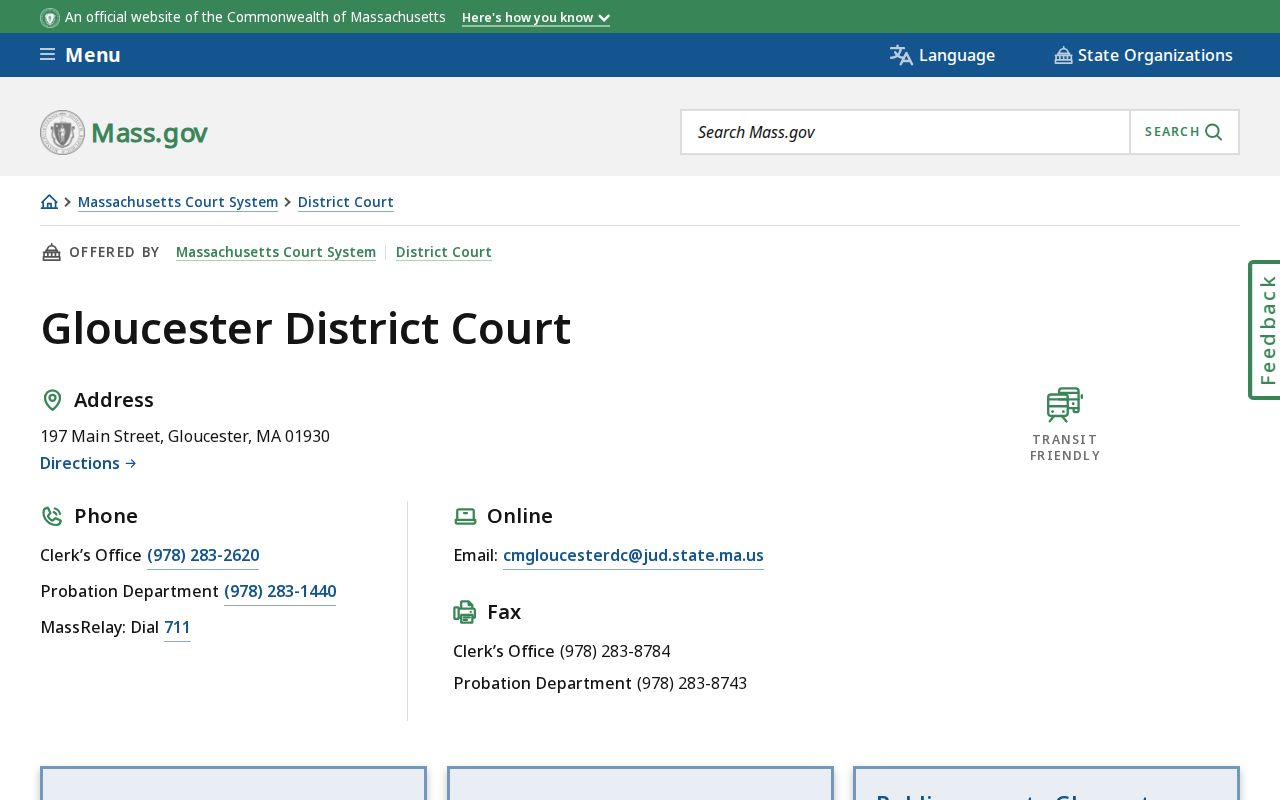
Essex County spreads its court business across several buildings. That is why a city name alone will not tell you which courthouse holds a file. The Newburyport District Court handles the northern coastal towns. The Ipswich District Court covers the four inland towns, which share one building and one phone line.
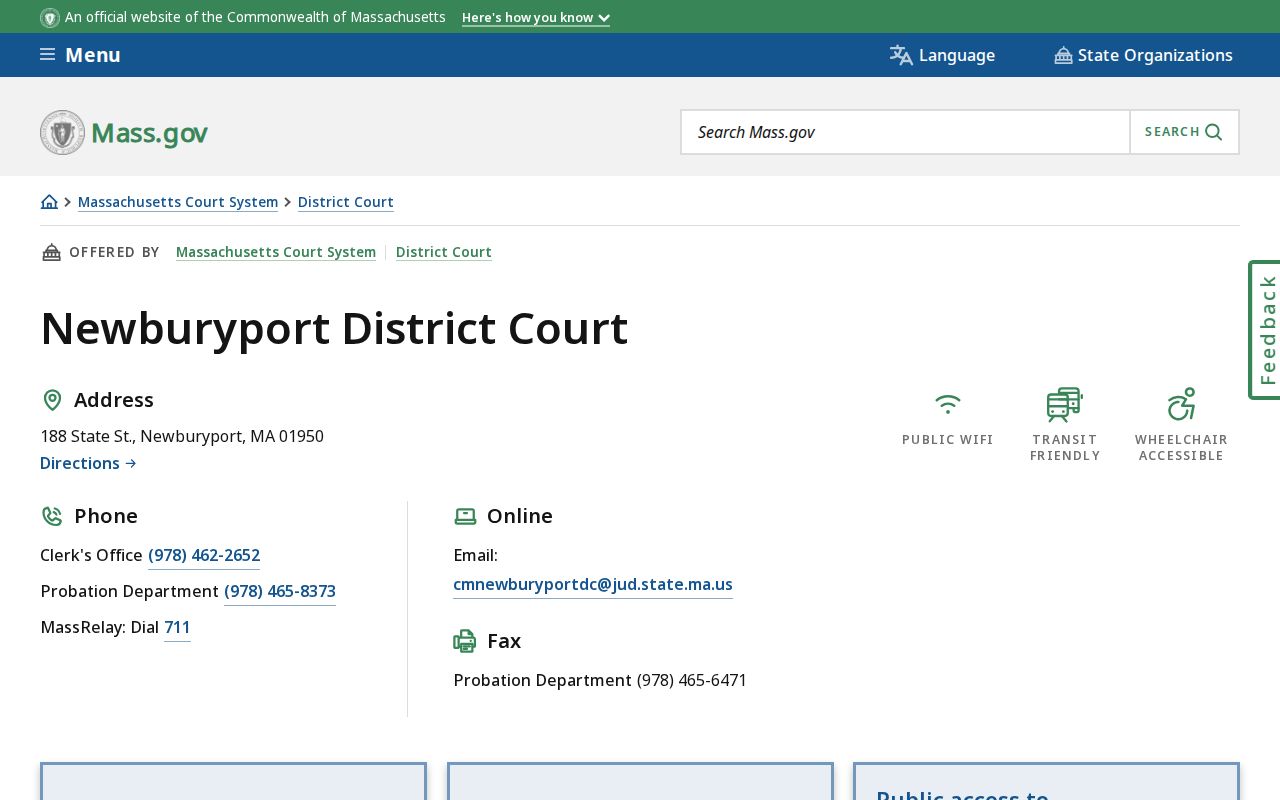
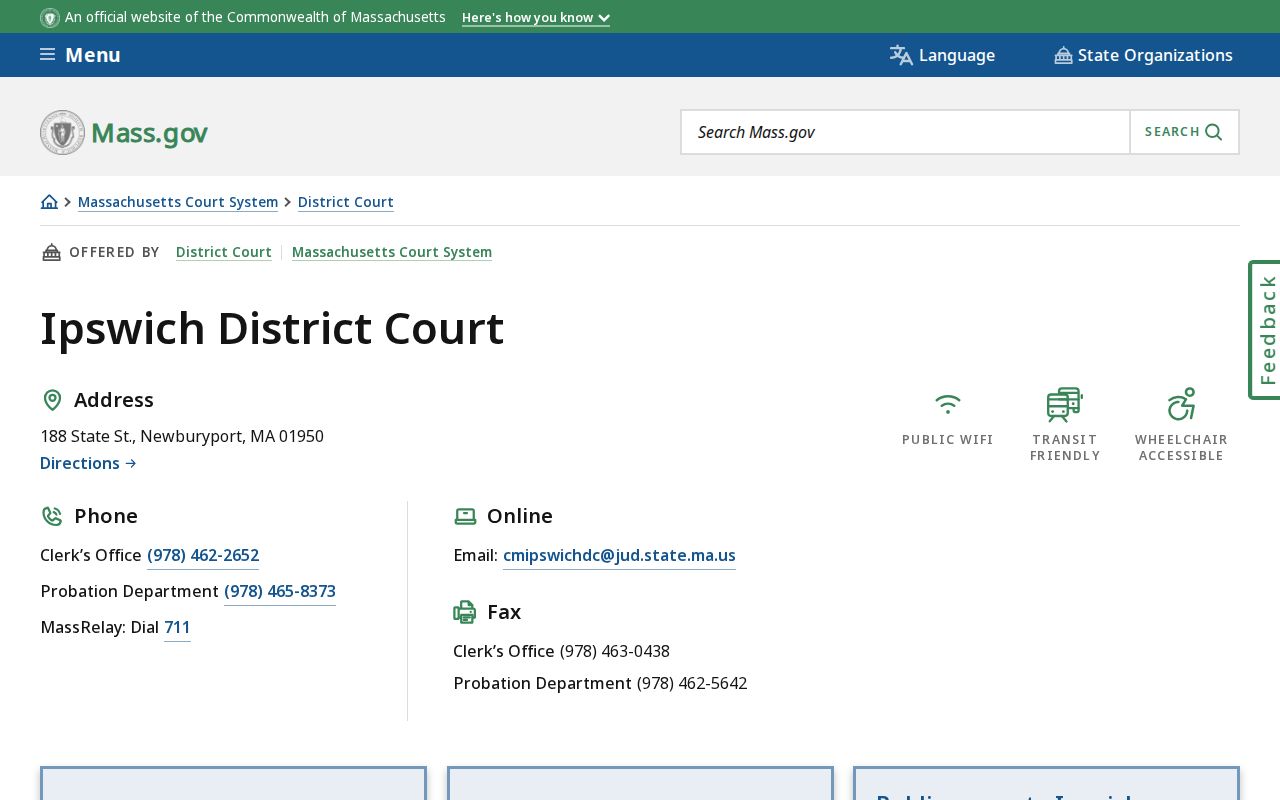
Two divisions share a single counter in Ipswich, so one call can cover either town list. Family and probate files work differently. The Essex Probate and Family Court serves all of Essex County from Salem.
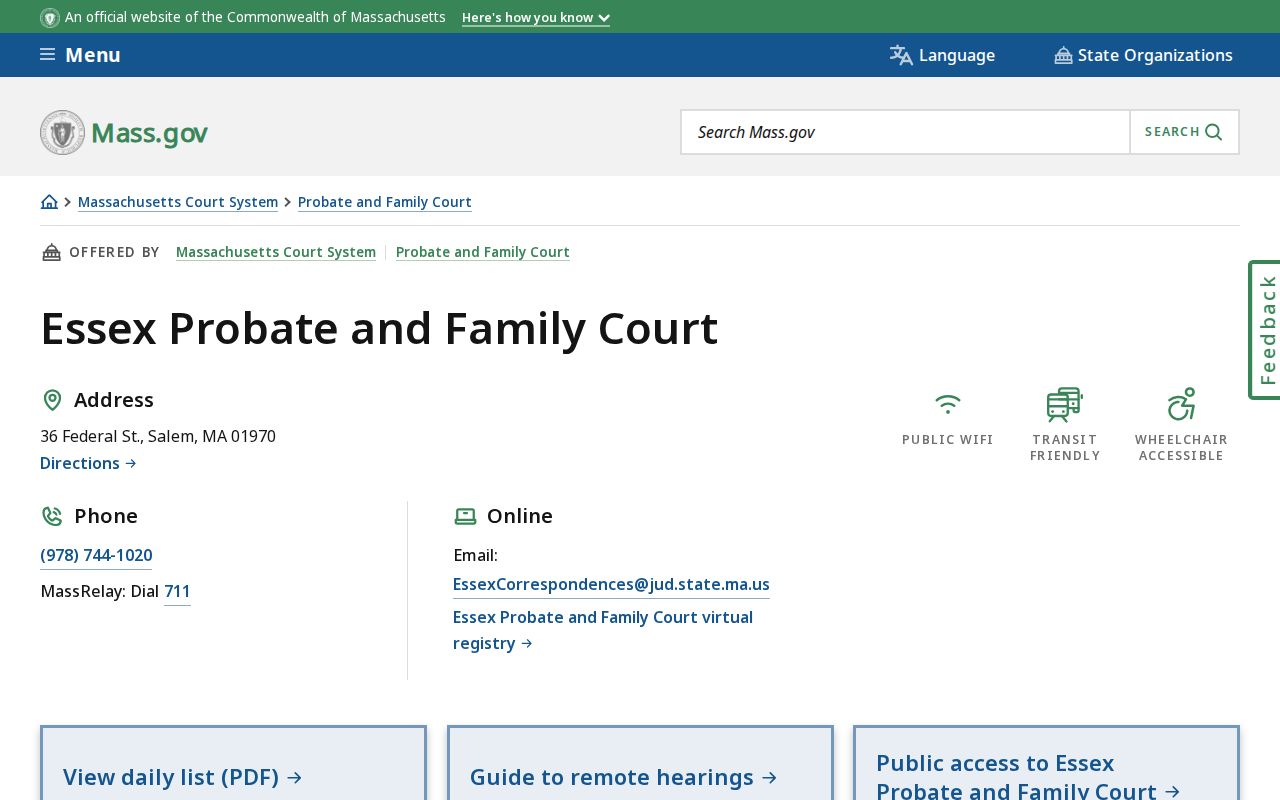
That registry answers only for its own files, which are not criminal warrants and are sometimes confidential.