
Essex County Warrant Checks
No single desk in Essex County answers every warrant question. A warrant check here runs through several offices: the state Trial Court case index, the clerk who holds the file, the probation department attached to that court, and the sheriff for civil process. A default warrant from a Lawrence case sits with the Lawrence District Court. A civil capias, by contrast, sits with the sheriff. Know which kind you are chasing before you dial.
- Open the state Trial Court case index and choose a court department and division first.
- Search by name, or by case number or ticket number when you have an exact match.
- File a written records request with the issuing clerk when the index is thin.
- Call the criminal clerk and ask whether the warrant is still outstanding.
- Ask about probation, traffic, and civil process in the same call, then confirm the answer in writing before you rely on it.
Why No Single Essex Warrant List Exists
Massachusetts keeps one internal warrant record system shared by courts and police, and the public cannot open it. The Warrant Management System is named in state law, and clerks and officers use it daily. That is why no Essex County website publishes a searchable roster of open warrants. What the public gets instead is the case index, which shows docket events. A docket event, though, is not a live status check. A name missing from one docket does not rule out process from another court, a probation office, or an out-of-state case. Note: a clean result means the record you searched is clear, not that no warrant exists anywhere in the county.
Warrants in Essex County: The Main Types
The label on a warrant decides which office you call and what can be done about it. Massachusetts sources favor warrant, default warrant, and warrant for arrest. The Essex County sheriff, meanwhile, uses capias for civil process. Go by the docket wording from the case in front of you, not by guesswork.
| Warrant Type | How It Arises | Who Issues It |
|---|---|---|
| Arrest warrant | Complaint or indictment supported by probable cause | District Court or Essex Superior Court |
| Default warrant | Unpaid fine, cost, restitution, or support order | The court that set the amount |
| Bench warrant | Missed court date, probation appointment, or summons | The judge holding the case |
| Civil capias | Unpaid civil judgment owed to a plaintiff | Civil court, enforced by the sheriff |
| Search warrant | Authorization to search for evidence | Court on sworn application |
Inside the Trial Court Case Index
The public case index is free, and it asks for court context before it asks for a person. Pick the wrong department or division and your search comes back empty, which is the most common Essex County mistake. Start with the court printed on the notice. The state guide to searching court dockets shows the field order the form uses and how each choice narrows what you see.
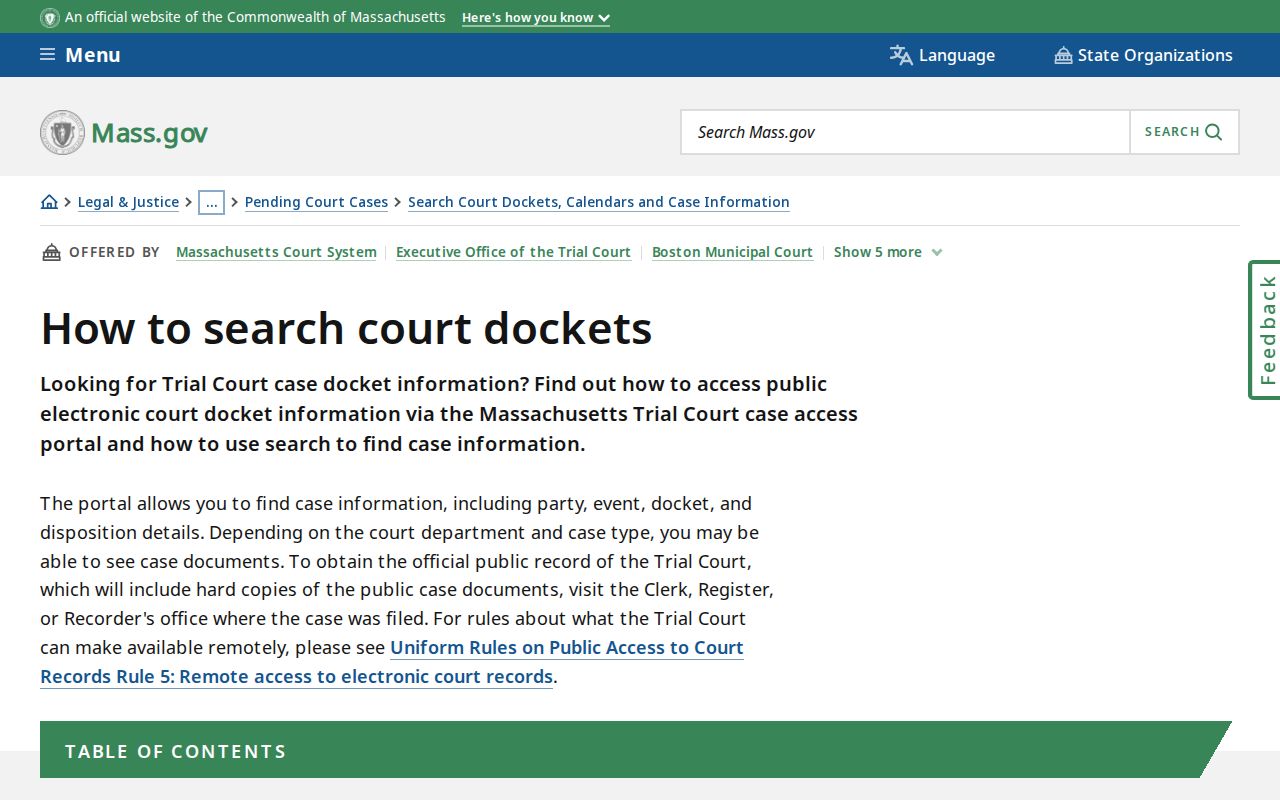
Those fields set the limits of any search in Essex County. Results reach only as far as the division you picked.
| Field | Type | Required | Notes |
|---|---|---|---|
| Court Department | Dropdown | Yes | District, Superior, Probate and Family, Juvenile, Housing |
| Court Division | Dropdown | Yes | Appears after a department is chosen |
| Court Location | Dropdown | Often | Lawrence, Lynn, Salem, Haverhill, Peabody, Gloucester, Newburyport |
| Number of Results | Select | No | Can be adjusted before a search runs |
| Name, Case, or Ticket tab | Tab | One | Case and ticket searches need exact formatting |
Essex County Warrant Records: What They Show
A court record does not hand you a tidy warrant card. What it shows is a docket, and the warrant shows up as an event with a date and a reason, followed later by another event if it was recalled or discharged. Read the case identity first in any Essex County record. Then read the events in order. The newest event tells you whether the process is still open.
| Case or Docket Number | The court's identifier, for example 1153CR000123; exact spacing matters in a search |
|---|---|
| Party Name | The name on the complaint or indictment |
| Charge or Reason | The offense charged, or the missed obligation behind a default |
| Issuing Court | The District Court or Essex Superior Court that holds the file |
| Bond or Amount | Release terms set by a judge, or the amount owed |
| Status Event | Issued, served, returned, recalled, or discharged |
Eight Essex Court Locations, Not One
Essex County has no city or municipal criminal court. Criminal and traffic process runs through District Court locations in Gloucester, Haverhill, Ipswich, Lawrence, Lynn, Newburyport, Peabody, and Salem, plus the Superior Court in Salem for indictments. Ipswich shares a building and phone line with Newburyport. A Lynn case and a Methuen case sit with different clerks, even though both are Essex County matters. The Superior Court clerk's office keeps the felony and indictment files. The Superior Court location record lists the Salem address and the clerk's office contact.
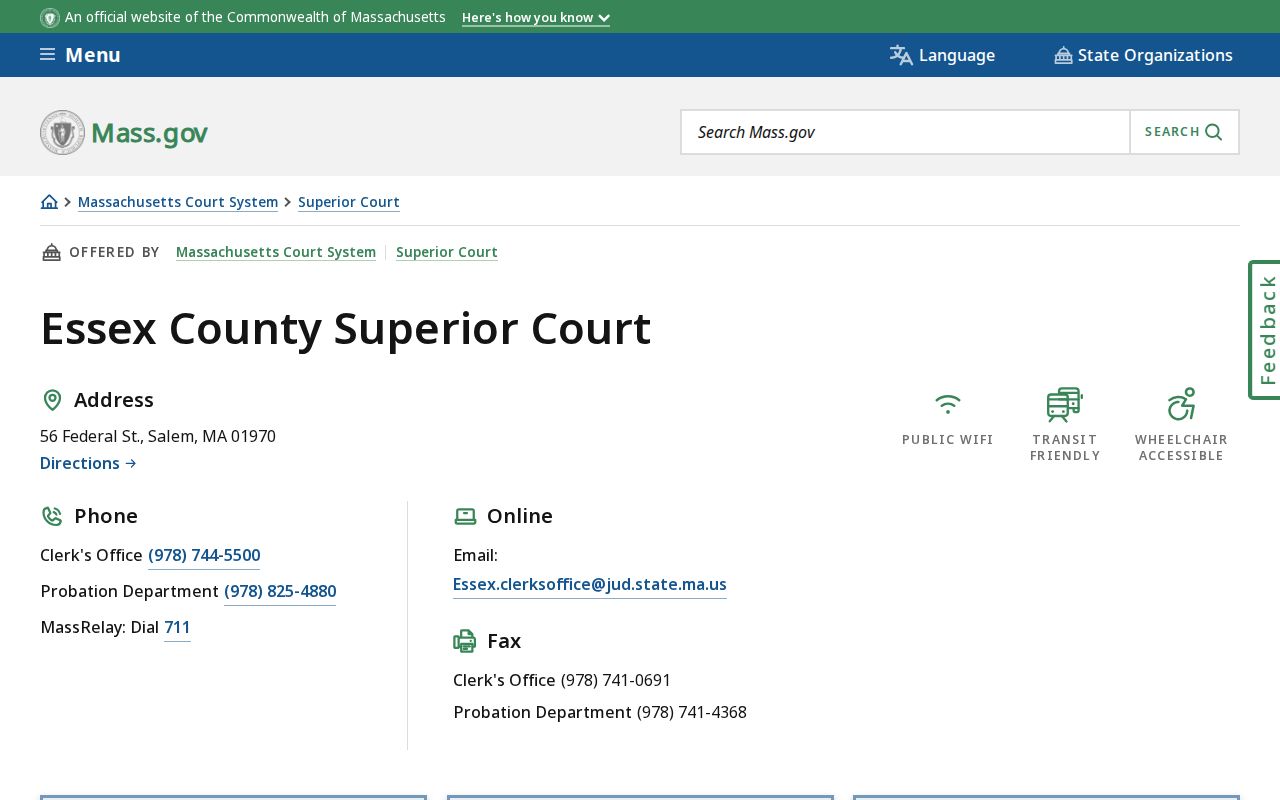
Picking the right building saves a call in Essex County. A clerk at the wrong location can only tell you the file is not there.
Essex County Warrants: Who Issues, Who Serves
A judge or clerk-magistrate issues the process, an authorized officer serves it, and the issuing clerk keeps the record. City police, State Police, and sheriff's deputies can all serve, and a warrant may be executed anywhere in Massachusetts. Service does not move the file, though, and the sheriff cannot recall a court order. The sheriff's public warrant channel in Essex County is civil. The Essex County Sheriff's capias page explains civil arrest process on an unpaid judgment and the personal surrender option for some in-county cases.
Essex County Sheriff, Civil Process Division
35 Congress St., Suite 2100A
Salem, MA 01970
978-750-1900 ext. 3590
Warrant flow: Complaint or indictment › Warrant issued by the court › Served by an authorized officer › Return and recall recorded on the docket.
Essex Default Warrants and Civil Capias
These two terms are the easiest to mix up in Essex County, and mixing them sends people to the wrong office. A default warrant comes out of a criminal or payment default in a court case. A civil capias comes out of a civil judgment, and the sheriff's Civil Process Division enforces it. A criminal clerk can answer only one of the two.
| Default warrant | Criminal or payment default in a court case; check with the issuing District or Superior Court clerk |
|---|---|
| Civil capias | Unpaid balance owed to a plaintiff; check with the sheriff's civil process office and the civil court |
| Personal surrender | The sheriff's civil term for a voluntary appearance, offered in limited in-county cases rather than as a criminal walk-in |
Handling an Essex County Warrant
Once a warrant is confirmed, the next move belongs with an attorney and the issuing court. Massachusetts courts routinely let a lawyer ask for a recall, a new date, or a payment arrangement before anyone appears in person. Calling the clerk first is free, and it tells you whether the court wants a filing, a phone call, or an appearance before a judge. Bring identification. Bring the docket number. Bring anything that explains the missed date. An Essex County warrant rarely gets sorted out in one step, but the clerk will tell you the steps.
Important: Talk to a lawyer before turning yourself in. Being stopped with an open warrant can lead to arrest, booking, and a bail decision on the spot.
Essex Warrant Recall and Arrest Fees
Massachusetts courts, including those in Essex County, can set two separate fees on a default warrant. A recall fee applies when one is withdrawn. The arrest fee is larger. It follows a taking into custody. Either can be waived, the recall fee for good cause and the arrest fee on a showing of indigency. A payment-only default may also carry an assessment on top of the amount owed, and none of these figures are bond amounts, so ask the clerk what applies.
- Default warrant
- Process issued when an ordered amount or required payment is not made.
- Recall
- Court action that withdraws a default warrant, sometimes with a fee.
- Discharge
- Payment or court action that ends a payment-only default warrant.
- Failure to appear
- Missing a required court event, which can lead to a warrant.
- Return
- The officer's report back to the court after a warrant is served or not served.
Essex Payments Do Not Clear Warrants
Paying online feels easy in Essex County. It does not clear a warrant. State guidance says it plainly: an online payment does not remove an outstanding warrant, and a court visit is required. A payment can resolve what was owed on a payment default. The warrant event stays on the docket anyway. Only a judge or clerk can recall it. Keep the receipt, ask the clerk what the payment actually closed, and confirm the warrant status separately at the Essex County court. Watch for scams too. The sheriff's office says it will never text court documents or demand money to stop an arrest. Any text or email demanding payment for that is a fraud attempt, so call the clerk at the number the court publishes instead.
Essex County at a Glance
Scale explains why an Essex County warrant check takes patience. The county is spread out. It spans 34 communities across the North Shore and Merrimack Valley, from the Cape Ann towns to the New Hampshire line. That breadth feeds the courts, which handle a high volume of criminal, traffic, and civil matters each year.
Warrant Record Access Under Massachusetts Law
Public records rules here split in two. Files made or received by state and local agencies fall under the Public Records Law, but court files answer to the Trial Court's own access rules instead. In practice, a docket is open at the clerk's counter during business hours. Some documents are still withheld. Search warrant paperwork stays out of public view between issuance and return, juvenile records are generally closed, and an impounded file needs a court order. The Salem District Court listing shows how each court publishes its address and counter.
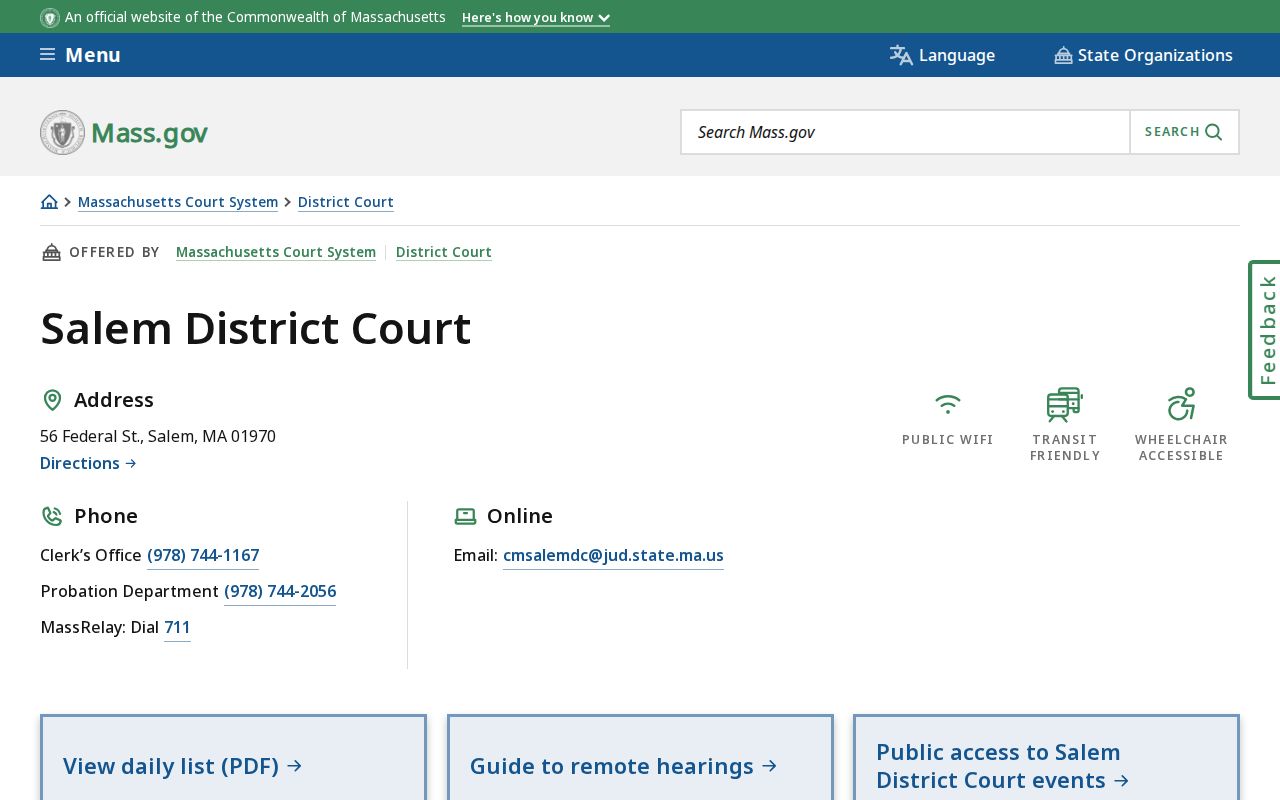
The counters do the real work. Salem and every other Essex County location handle file review in person, and the online index is a companion to that counter, not a replacement.
Key Rules:
Massachusetts Public Records Law, G.L. c. 66, § 10 - agencies must respond to a records request in writing, and a written request is easier to track.
G.L. c. 4, § 7(26) - lists the exemptions that keep some records out of a public response.
G.L. c. 276, § 2B - a search warrant application and affidavit are not public until the warrant is returned.
City Warrant Records in Essex County
Each of the five largest cities in Essex County handles warrants at two levels. City police serve and encounter process. The District Court holds the file. City payment portals cover parking and ordinance tickets. Those tickets are a different matter from a court warrant, so start with the city's page and confirm anything you find with the District Court clerk.
Lynn Warrant Records
101,253 residents, 2020 Census. Lynn Police records and Lynn District Court, which also serves Marblehead, Nahant, Saugus, and Swampscott.
Lawrence Warrant Records
89,143 residents, 2020 Census. Lawrence Police and the Fenton Judicial Center, which also serves Andover, Methuen, and North Andover.
Haverhill Warrant Records
67,787 residents, 2020 Census. Haverhill Police records and Haverhill District Court on Ginty Boulevard.
Peabody Warrant Records
54,481 residents, 2020 Census. Peabody Police and Peabody District Court, which also serves Lynnfield.
Methuen Warrant Records
53,059 residents, 2020 Census. Methuen Police records and Lawrence District Court, which holds Methuen criminal cases.
Warrants move one case at a time. The more precise the relevant Essex County city page's walkthrough, the faster the answer comes.